Are you dreaming of velvety lattes, luscious cappuccinos, or a rich, creamy hot chocolate right in your own kitchen? The secret weapon to transforming your daily brew from ordinary to extraordinary is often a simple yet powerful gadget: the Hot Milk Frother. This guide will dive deep into everything you need to know about these fantastic devices, helping you craft café-quality beverages with ease and precision, making every sip a luxurious experience.
What is a Hot Milk Frother and Why Do You Need One?
At its core, a hot milk frother is an appliance designed to heat and aerate milk, creating a light, airy foam or silky, steamed milk texture perfect for a variety of beverages. While some frothers only create cold foam, a hot milk frother does double duty, warming your milk to the ideal temperature while whipping it into that delightful consistency.
Why should you consider adding one to your kitchen arsenal? Firstly, convenience is a major factor. Instead of making trips to the coffee shop, you can enjoy your favorite milk-based drinks from the comfort of your home, saving both time and money. Secondly, a good hot milk frother offers incredible versatility. Beyond the classic latte or cappuccino, you can elevate your hot chocolate, create foamy chai lattes, craft impressive flat whites, or even experiment with macchiatos and matcha lattes. Finally, these devices provide consistent results, ensuring that perfect foam texture every time, which can be tricky to achieve manually.
Types of Hot Milk Frothers: Finding Your Perfect Match
The world of hot milk frothers offers several variations, each with its own benefits and features. Understanding these differences will help you choose the best frother to suit your lifestyle and coffee habits.
Electric Jug Frothers
These are perhaps the most popular and user-friendly type of hot milk frother. Electric jug frothers are self-contained units that typically feature a non-stick carafe with an integrated heating element and a whisking mechanism. You simply pour in your milk, select your desired setting (often with options for hot foam, steamed milk, or even cold foam), and press a button. The frother does all the work, heating and frothing the milk automatically.
- Pros: Easy to use, consistent results, often offers multiple settings for different foam textures and temperatures, good capacity for multiple servings, quiet operation.
- Cons: Can take up some counter space, generally a higher price point than handheld options.
- Key Features to look for: Magnetic whisks for easy removal and cleaning, multiple temperature controls, and clear fill lines.
Handheld Electric Whisks
For those on a budget or with limited counter space, a handheld electric whisk is a compact and portable option. These battery-operated wands feature a small whisk at the end. To use them, you first heat your milk separately (on a stovetop or in a microwave), then immerse the whisk into the hot milk to create foam.
- Pros: Affordable, extremely compact, portable for travel, quick for single servings.
- Cons: Requires manual heating of milk, less consistent results than automatic models, generally only creates airy foam rather than silky microfoam.
Manual Frothers (French Press Style)
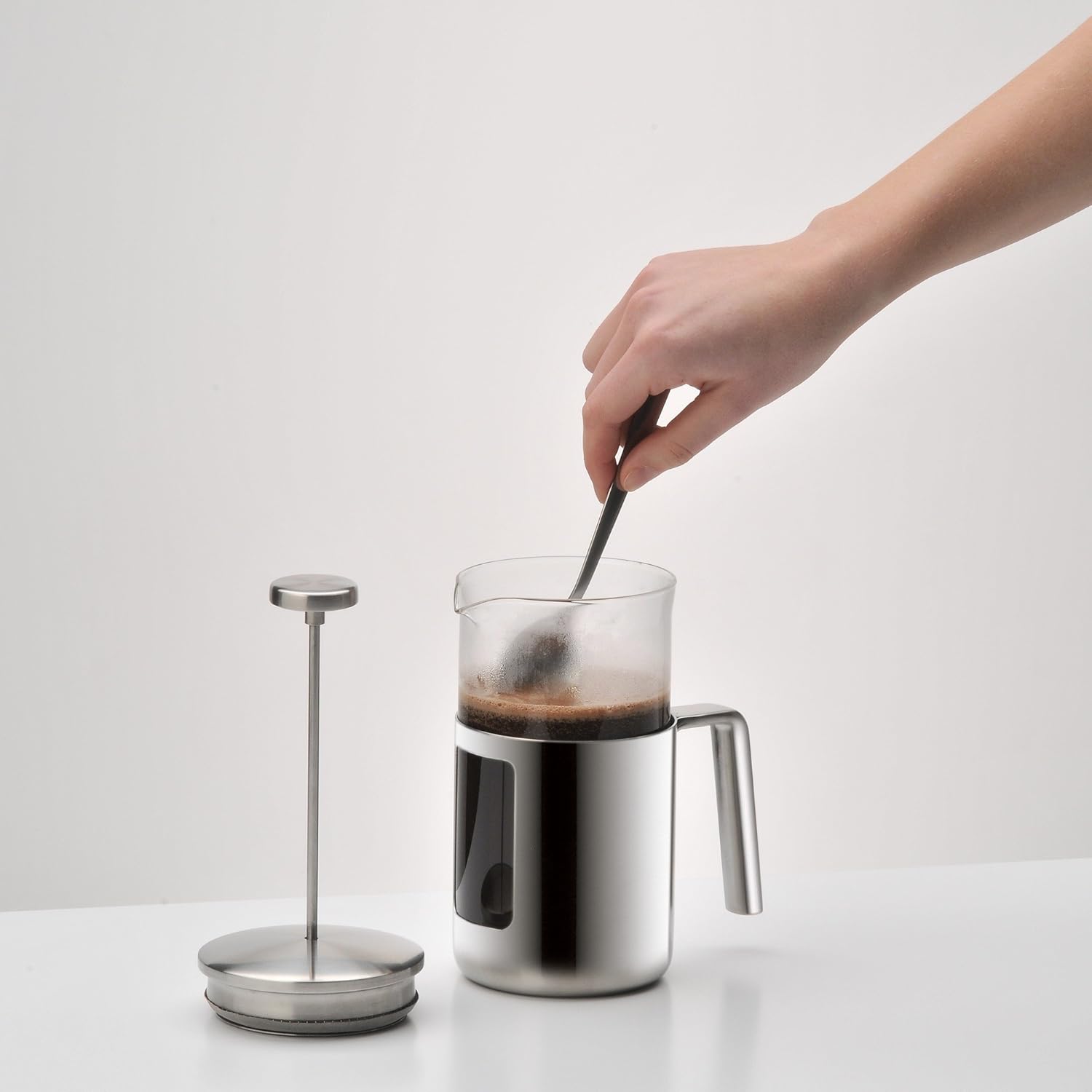
Manual frothers, often resembling a small French press, consist of a carafe and a plunger with a mesh screen. You heat the milk first (again, either on a stovetop or in a microwave) and then vigorously pump the plunger up and down to aerate the milk.
- Pros: Offers precise control over foam density, no electricity required, often very durable (especially stainless steel models).
- Cons: Requires more physical effort, takes longer, can be a bit trickier to clean depending on the design.
Espresso Machine Steam Wands
While not standalone hot milk frothers, many espresso machines come equipped with steam wands. These are the tools professional baristas use to create incredibly fine microfoam. Learning to master a steam wand takes practice, but it offers unparalleled control over milk texture and temperature. If you already own an espresso machine, it’s worth exploring its steam wand capabilities.
Top Features to Look for in a Hot Milk Frother
When selecting a hot milk frother, keep these key features in mind to ensure you get the best device for your needs:
- Temperature Control: The ability to adjust or select specific temperature settings is crucial for achieving the perfect warmth without scalding the milk. Most frothers aim for 140-160°F (60-71°C).
- Multiple Froth Settings: Look for options like “light foam,” “thick foam,” “steamed milk” (no foam), and “cold foam” to maximize versatility for different drinks.
- Capacity: Consider how many servings you typically make. Capacities range from single-serving models to those that can froth enough milk for several drinks.
- Ease of Cleaning: Non-stick interiors, detachable whisks, and dishwasher-safe parts make cleanup a breeze, preventing stubborn milk residue.
- Quiet Operation: A quieter frother is always a bonus, especially for early morning coffee routines.
- Compact Design: If counter space is a premium, a sleek, space-saving design might be a priority.
- Compatibility with Various Milk Types: Ensure the frother works well with your preferred milk, whether it’s dairy, oat, almond, or soy milk. Many modern frothers are optimized for both.
Mastering Your Hot Milk Frother: A Step-by-Step Guide
Using a hot milk frother is generally straightforward, but a few simple steps can ensure consistent, delightful results every time.
|
Our Picks for the Best Milk Frother in 2026
As an Amazon Associate I earn from qualifying purchases.
|
||
| Num | Product | Action |
|---|---|---|
| 1 | CIRCLE JOY Rechargeable Milk Frother Hanheld, Dual Coil Whisk Head Electric Coffee Frother, Portable Hand Frother Wand Drink Mixer for Matcha Lattes Cappuccino, Kitchen Gifts, Black |

|
| 2 | Nespresso Aeroccino 3 Milk Frother, Black, Steel |
|
| 3 | Zulay Kitchen Powerful Milk Frother Wand With 2 Duracell Batteries - Ultra Fast Handheld Drink Mixer - Electric Whisk Foam Maker for Coffee, Lattes, Cappuccino, Matcha, Hot Chocolate & Creamer - Black |
|
| 4 | INFOOD Milk Frother Rechargeable with Cover - Coffee Frother Wand, Drink Mixer Handheld with 2 Detachable Stainless Whisks 2 Speed Adjustable for Latte, Cappuccino, Hot Chocolate, Egg, Silver |
|
| 5 | Instant Pot Milk Frother, 4-in-1 Electric Milk Steamer, 10oz/295ml Automatic Hot and Cold Foam Maker and Milk Warmer for Latte, Cappuccinos, Macchiato, From the Makers of Instant 500W, Black |
|
| 6 | Milk Frother, 4 in 1 Electric Milk Steamer, Hot and Cold Foam Maker, 1 min Fast Frothing, 11.8 oz/350 mL Milk Warmer, Frother for Latte, Cappuccino, Temperature Control, Auto Shut-Off |
|
| 7 | Milk Frother and Steamer, COLDFILL 8-in-1 Electric Frother for Coffee, 400ml Large Capacity Detachable Milk Steamer, Automatic Warm and Cold Foam Maker, Quiet, Dishwasher Safe, Easy to Clean |
|
| 8 | Harmony Leaf Handheld Milk Frother, Stainless Steel Electric Drink Mixer with Stand, Battery Operated Coffee Frother for Lattes, Matcha, Hot Chocolate and More, Black |
|
| 9 | Zulay Kitchen Powerful Milk Frother Wand With 4 AA Duracell Batteries - Ultra Fast Handheld Drink Mixer - Electric Whisk Foam Maker for Coffee, Lattes, Cappuccino, Matcha & Creamer |
|
| 10 | Zulay Kitchen Handheld Milk Frother with Duracell AA Batteries – Ultra Fast Electric Mixer & Foam Maker, Easy-Clean Drink Mixer for Coffee & More |
|
1. Choose Your Milk Wisely
Start with fresh, cold milk. While most milks can be frothed, whole milk typically yields the richest, most stable foam. If you prefer non-dairy options, look for “barista” versions of oat, almond, or soy milk, as they are formulated to froth better. Pour the milk into your frother, ensuring you stay below the indicated “max” fill line for frothing (there’s usually a lower line for frothing and a higher one for just heating). Overfilling can lead to spills.
2. Select Your Setting
Most electric frothers come with clear buttons or dials to choose your desired outcome. This might include options for hot, dense foam (perfect for cappuccinos), hot, light foam (ideal for lattes), or simply hot milk with no foam. Many also offer a cold foam setting. A red light often indicates a hot frothing cycle, while blue typically signifies cold.
3. Power On and Wait
Once your milk is in and your setting is chosen, simply press the start button. Electric frothers will automatically heat and froth the milk, typically shutting off when done. For manual frothers, this is where you engage in the plunging action after heating your milk to the optimal 140-160°F (60-71°C) range.
4. The Pour and Serve
As soon as the frother stops, gently tap the jug on your counter a few times to eliminate any larger air bubbles, then give it a swirl. This helps to create a smooth, glossy microfoam. Pour the frothed milk immediately into your coffee or beverage. For latte art, pour steadily from a height, then bring the spout closer as the cup fills to create your design. If you just want to top your drink with foam, use a spoon to hold back the milk and then dollop the foam on top.
The Art of Perfect Hot Milk Froth: Tips from a Pro
Achieving that perfect, silky foam is an art, but with these tips, you’ll be a frothing pro in no time:
- Temperature is Key: Avoid overheating your milk. Milk that’s too hot can taste scalded and won’t hold its foam as well. The sweet spot for heating and frothing is generally between 140-160°F (60-71°C).
- Always Start Cold: Cold milk allows more time for aeration before it reaches the ideal temperature, leading to a richer, more stable foam.
- Experiment with Milk Types: Don’t be afraid to try different kinds of milk. Whole milk offers the most natural fats for creamy foam, but barista-style non-dairy milks are specifically formulated to mimic dairy’s frothing properties.
- Cleanliness Matters: Milk residue can affect the taste and performance of your frother. Always clean your frother immediately after each use.
- Swirl, Don’t Stir: After frothing, a gentle swirl of the jug helps to integrate the foam and liquid milk, creating that desirable velvety texture. Tapping the jug also releases larger, less desirable bubbles.
- “Barista Insight: ‘The magic truly happens when the milk reaches that sweet spot – around 150°F. It’s hot enough to warm your soul, but not so hot that it scorches the delicate proteins, ensuring a silky, stable foam every time.’ – Sarah Miller, Master Barista.”
Maintenance and Cleaning: Keeping Your Frother Pristine
Proper care ensures the longevity and optimal performance of your hot milk frother.
- Immediate Rinse: The golden rule is to rinse your frother immediately after each use. Milk dries quickly and can become very difficult to remove once hardened.
- Hand Wash vs. Dishwasher Safe: Always check your frother’s manual. Many electric frothers have non-stick interiors that are easy to wipe clean, and detachable whisks that can be rinsed or placed in the dishwasher. Some carafes might be fully dishwasher safe.
- Detachable Parts: Most electric frothers feature magnetic whisks or removable components, making them easy to clean thoroughly.
- Avoid Submerging Electrical Bases: Never submerge the electrical base of your frother in water. Instead, wipe it down with a damp cloth.
Choosing Your Ideal Hot Milk Frother: A Buyer’s Checklist
Before making your purchase, ask yourself these questions to pinpoint the perfect hot milk frother for your home:
- What drinks will you make most often? (Lattes, cappuccinos, hot chocolate, cold drinks?)
- What is your budget? (Handhelds are cheapest, electric jugs vary, premium brands are more expensive.)
- How many servings do you need at once? (Single-serve or multi-serve capacity?)
- What type of milk will you use primarily? (Dairy, oat, almond – check for compatibility.)
- How much counter space do you have available? (Compact handheld vs. larger electric jug.)
- How important is ease of cleaning to you? (Look for non-stick, detachable, dishwasher-safe parts.)
Frequently Asked Questions (FAQ)
Q: Can a hot milk frother make cold foam?
A: Many modern electric hot milk frothers are highly versatile and offer both hot and cold frothing settings, making them suitable for both hot lattes and iced coffees.
Q: What type of milk works best for hot frothing?
A: Whole milk generally produces the richest, most stable foam due to its fat content. For non-dairy options, “barista” versions of oat, almond, or soy milk are often specially formulated to froth effectively.
Q: What is the ideal temperature for frothed hot milk?
A: For optimal frothing and taste, aim for between 140-160°F (60-71°C). This temperature range ensures the milk is hot enough to enjoy but not so hot that it scorches or negatively impacts the foam’s texture.
Q: How do I clean my hot milk frother?
A: Always rinse your frother immediately after each use to prevent milk residue from drying. Many models feature non-stick interiors and detachable, dishwasher-safe whisks or carafes. Crucially, never submerge the electrical base in water; wipe it clean with a damp cloth.
Q: Is a hot milk frother worth it?
A: Absolutely! If you enjoy café-style milk-based beverages at home, a hot milk frother is a worthwhile investment. It offers unparalleled convenience, consistent quality, and can significantly reduce your coffee shop expenses over time, allowing you to easily indulge in luxurious drinks.
Conclusion
A hot milk frother is more than just a kitchen gadget; it’s a gateway to a world of delightful, customized coffee and milk-based beverages. Whether you crave the perfect cappuccino, a comforting hot chocolate, or a silky latte, understanding the different types, proper usage, and maintenance will empower you to become your own barista. Embrace the joy of crafting exquisite drinks at home and elevate your daily ritual with the magic of perfectly frothed hot milk.